WHY ARE YOU COMPETING IN A PAGEANT?

Over the many years I have been involved with pageants, I have heard different reasons why young ladies compete in them. Some are very lofty, some are simple and most of them are not the real reason.

The true reason you compete is what will ultimately determine how you react to the outcome of your participation. Therefore, it is primordial that you are very clear on why you are competing and what it would mean if you win or not.

It may very well be that you are not even aware of the real reason you are competing. Any objective that entails personal development, moving out of your comfort zone and challenging yourself, is a good one, because no matter what the outcome you will realise your goal.

Consider though if you are competing to prove your worth to someone else. Off course, if you win you will feel a great sense of accomplishment. If you do not, it will be a tremendous disappointment and you will probably make it mean that now the person(s) must think even less of you. I doubt that is the outcome anyone wants out of their participation in a pageant.

In preparing to compete in a pageant, be brutally honest with yourself. Really take a cold, hard look at your true reason for competing. Find out if you are prepared to deal with the outcome of not winning, given what your real motivation is. You may realise that another avenue of dealing with whatever is bothering you, will be more beneficial for you.

You will find that you are most successful competing in pageants when your ultimate goal is to grow as a human being. For most people, competing is stepping out of their comfort zone and that is probably the greatest benefit you can derive from pageants. At the end of the day, your success is measured by the personal achievement you walk away with and that doesn’t even have to entail a crown.


FAILURE IS OUR FRIEND

  You can ask Kandace Krueger

One thing I always tell my coachees is that they have to compete to win and prepare to fail. Competing to win means you have to give it your all. Preparing to fail just recognizes that the odds are not forever in your favour.

We have an interesting relationship to failure, as we attach all sorts of meaning to the fact that we have failed at something. The “Oxford Pocket School Dictionary” defines the noun “failure” as “not being able to do something”. That is all failure is, really. There were some measures you wanted to meet and you were unable to.

Off course, in beauty pageants failure is somewhat harder to take because your success depends for a great part on the opinion of others, the panel of judges. In sports you train hard for an event and after the event you know immediately whether your performance was sufficient for you to be successful. You also know which measures you need to improve in order to win next time.

Beauty pageant results are dependent on the personal opinions of a very specific group of people at a very specific moment. If you change just one of the judges, you most probably will get a different result. The opinion of those judges can also be easily affected by something very simple over which you have no control. Imagine if you will that you chose a gown colour, which is exactly the same colour as one of the judges or a judge’s date wore to the prom. Seeing that gown colour will have a whole different effect on that judge if his or her prom night was one of the best nights of his or her life or if it was a disastrous experience.

Failing at something does not make you a failure nor does it mean that you are any less than the winner. The winner was successful at meeting the measures and you and many others were not. That’s all! What you need to do is evaluate the result. You may decide that for you that one time was enough and that is fine.

If winning that crown is sufficiently important for you, do try again. Look at where you can improve your performance, make the necessary adjustments and go back on the field.

One shining example of someone who never let failure hold her back is Kandace Krueger,  who won the Miss Texas USA 2000 title at the age of 24. Since turning 18, Kandace had competed in local Miss Texas USA preliminaries, doing well but never winning.

In 1999, Kandace won her first local title but did not place at Miss Texas USA. In 2000 she won her second local title and, in her first appearance in the Miss TEXAS USA semi-finals, Kandace went all the way to win the right to represent Texas at Miss USA 2001.

Kandace won that title as well and placed third at Miss Universe 2001.


“TELL US ABOUT YOURSELF”, Part 2

Continuing from our previous discussion on the Pageant Interview, we will now look on how to conduct yourself in the actual interview.

The final piece of preparation is to select one topic which you would like to tell the judges about yourself. Then you are ready to face the judges!

The interview can have two different question formats:

  • the direct question, in which you are asked a specific question on a specific topic, i.e. “What would you do to inspire the youth of your country?”
  • the open-ended question, in which you basically get to decide what you want to talk about, i.e. “Tell us about yourself?”

Starting off with an open-ended question is off course ideal, because you can go straight in and talk about the topic you selected beforehand. Do, however, avoid the following pitfalls:

  • do NOT start by saying your name. You have already been announced so the judges know who you are
  • do NOT mention your age, unless it is relevant for the topic you are going to talk about, i.e. you are 20 years old,  have been working since you are 16 and you are now the proud owner of your own home
  • do NOT mention your profession or study, unless you are going to talk about why you chose that profession or study as an insight to the person you are

The trick with a direct question is to structure your reply in such a way that you get to talk about the subject you chose beforehand. Some questions are easily malleable, whereas other aren’t. It also depends on your topic.

If you find that you can’t direct the question, answer it quickly in order to get another question. When I say quickly, I mean without embellishment. It is extremely important to answer every question properly.

If you are asked a question that you are comfortable with and very knowledgeable about, keep talking so that you do not give the judges the opportunity to ask you something you are not comfortable answering. Make sure you do not start repeating yourself though. Only stretch your answer if you have a lot to say about the subject.

Body language is also an important aspect of the Personal Interview. It is therefore important that you know how your body reacts when you are stressed.

  • if you have a tendency to fidget, sit in a way that will make make fidgeting more difficult
  • if you use your hands a lot when you speak, hold one hand over the other in your lap so as to control your hand movements
  • always address the judge that asked the question. Do however, take time during your answering to look at each of the other judges
  • look the judges in the eyes. Averting their eyes creates the impression that you have something to hide. If looking at them straight in the eyes makes you uncomfortable, focus on the space between their eyebrows
  • dress appropriately. Never wear cocktail outfits. You don’t have to wear a suit, but take into account the time of day and the fact that you are interviewing for a job
  • make sure what you are wearing and the way you sit does not give the judges unexpected views
  • do not wear distracting earrings or necklaces

It will for sure help you to practice, so invite some of your friends over and do some mock interviews.

If you are planning to compete, the best way to prepare for the Personal Interview portion of any pageant is to join a Toastmasters Club about a year before the date of your pageant. To this day I have found them to be the best coaches in the area of public speaking and structuring of your thoughts for communication to others.


“TELL US ABOUT YOURSELF”, Part 1

It only lasts about 3 minutes and all you have to do is talk about yourself. It should be the easiest part about competing in a pageant, right? NOT!

One the parts of pageants that makes contestants most nervous is the personal interview. Yet, you can easily prepare yourself for it because you talk about a subject you should know everything about.

The interview is the part where the judges evaluate whether you got what it takes to fulfil the duties that come with the title you are vying for. Pageant directors instruct the judges which are the qualities to look for and these can vary per competition. Yet in big lines it is all about being able to carry out a conversation, while being engaging and composed.

When I started in pageants, each contestant would get 3 minutes with each judge. This worked because we had 10 contestants and 5 judges. In most pageants nowadays, because of the large number of contestants, each participant gets 3 minutes with the whole panel of judges.

In some international pageants, a group of delegates gets interviewed at the same time by the whole panel. In my opinion, this is a waste of everyone’s time because it hardly gives a judge the opportunity to say good afternoon to the delegate.

Three minutes does not sound like a long time, yet it can be if the conversation does not flow. This is the key to a great interview and to give a great interview you need to prepare yourself. Preparation is not difficult, but it is time consuming.

The first step is to make a list of:

  • your likes and dislikes
  • people you admire and those who irk you
  • your accomplishments
  • things you want to accomplish

Next step is to look at why all those things are on your list, i.e. why do you wish to become an accountant?

Next, think of the event(s) in your life which determined the way you feel about the things on your list, i.e. did winning a math competition make you decide you wanted to work with numbers?

You should also keep abreast of current events and have an opinion about them. Again, look at what led you to form that specific opinion.

It is important to have clear plans for the future. Where do you want to go, how do you plan to get there and do you have the necessary tools to get there. For instance, it is very  laudable to want to become a doctor of medicine. However, if you do not have the required secondary education, it is not a very realistic goal. So, be very realistic in your ambitions.

All these steps serve for you to have a clear understanding of who you are and how you got to be that way. Next, we will look at how to present what you know about yourself in the personal interview.

So, get pencil and paper and start making those lists!


NOTEWORTHY: This is How You Do Pageant Photography

13199473_989834577790288_1218633161_o

Zara Nortley, Miss Galaxy England 2016

Photographer: Stacey Clarke

Make-up: Sascha Martini


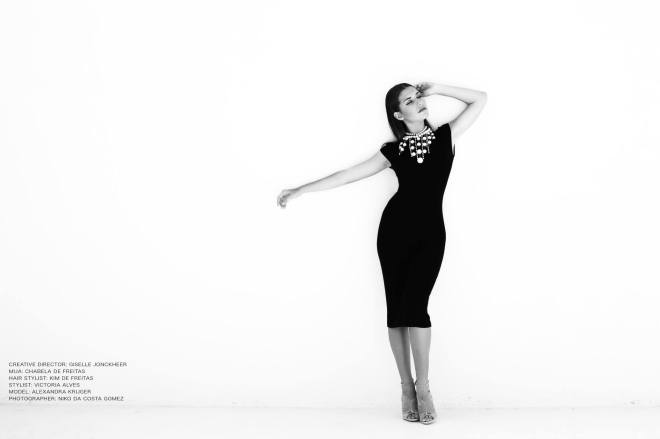
NOTEWORTHY: This is How You Do Pageant Photography

Alexandra Krijger, Miss Curaçao World 2015

Photographer: Niko da Costa Gomez, www.instagram.com/nikodacostagomez

NOTEWORTHY: Gowns with nude material

THIS IS HOW YOU ROCK A NUDE FABRIC GOWN:

AND THIS IS HOW YOU DO NOT:


WINNING (HAIR) STYLES

BEING PHOTOGENIC

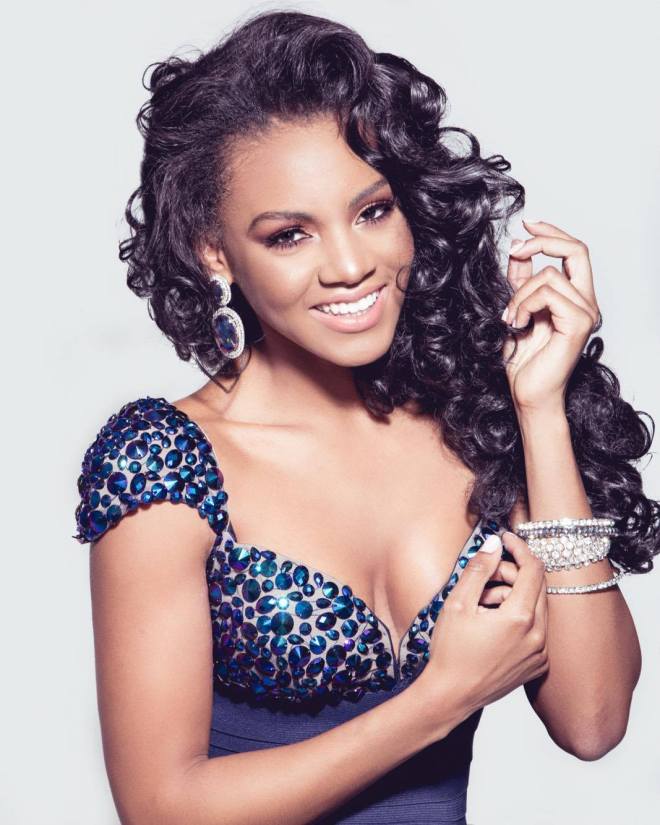
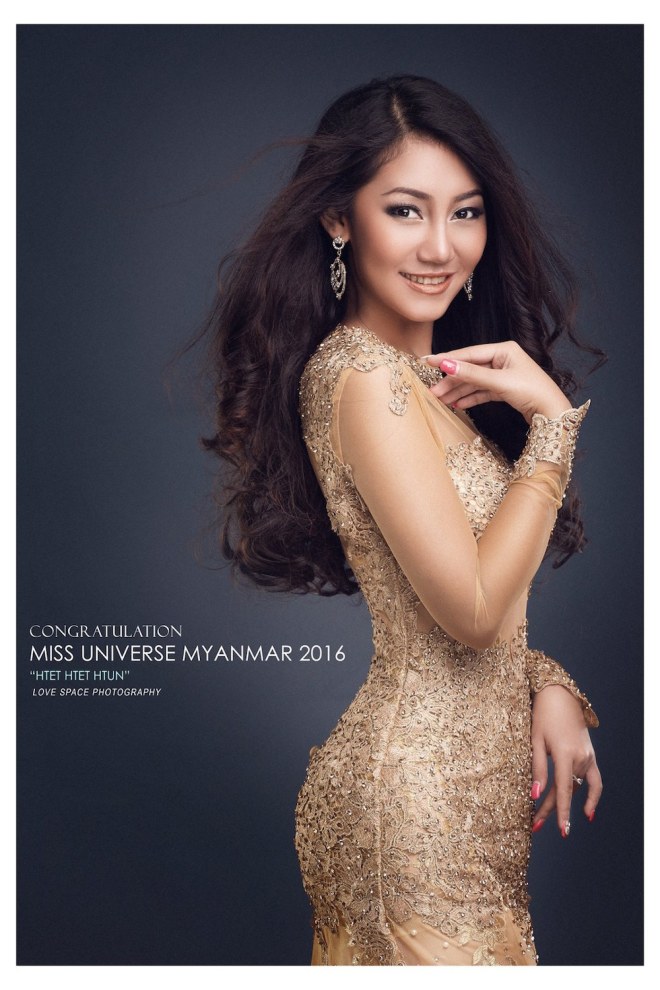
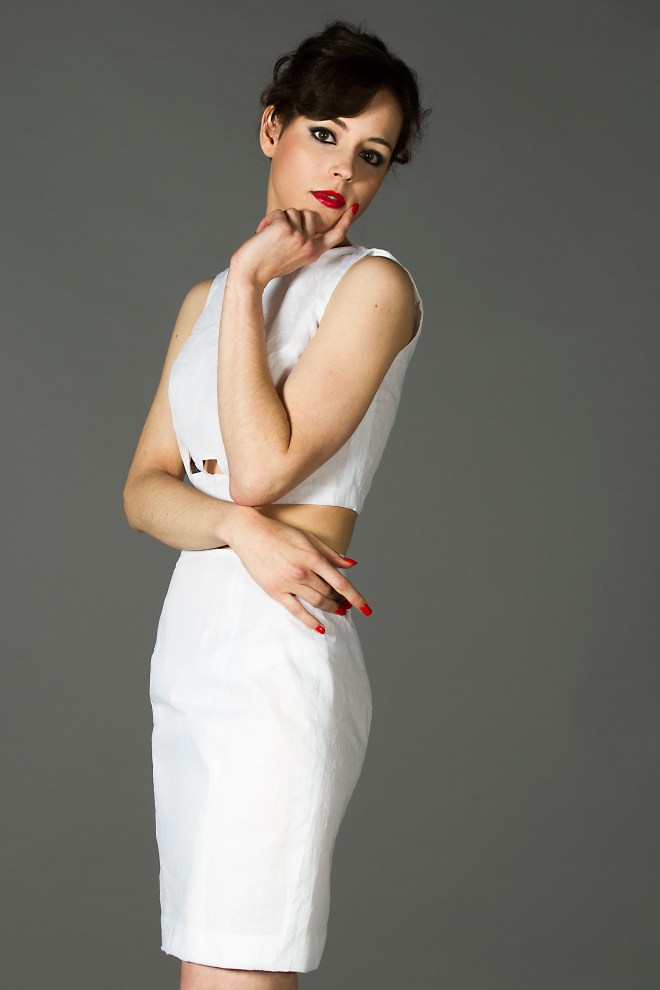
An important tool to have when competing in pageants is a photographic portfolio, basically a model portfolio with some pageant specific shots included.

Modelling work, both catwalk and commercial, is an important part of what is expected of the modern day beauty queen. This is why pageant management and, sometimes, judges, want to see what a contestant looks like in pictures.

It is very important that the pictures actually look like you, so the viewer can recognise the person standing in from of them in these.

One fantasy or glamour shot is OK, but the images should not be edited within an inch of your life. If you end up looking like Barbie, plastic skin and all, you are in trouble. As a photographer you learn that agents and advertising execs want to be able to see pores in facial pictures (unless you really have no visible pores).

emma-med

Particularly swimsuit shots should be true to your figure, as people working the fashion industry do not like surprises. So, please stay away from photographic diets.

Important is not to only show different looks, from very casual to glam and everything in between, but also different expressions. Give evidence that you are a brilliant photographic actor.

Lastly, decide in advance if you want a colour or black+white portfolio. Having a mixed portfolio is not deemed professional. My advice though is to go with colour for your pageant portfolio.